Case Study
Applying the Primer: A Case Study on Uncovering Beauty Tech Insights
A front-row seat to honest thoughts on beauty tech


62% said they’re concerned about the psychological effects of using filters too often

Inside this study
Beauty + tech, as defined by real users, not the industry.
Why filters feel like both a boost and a trap
The kinds of tools people wish existed in their routines
Where inclusion is still falling short
What’s missing: authenticity, access, and culture that feels true
Beauty and technology are in a situationship. The beauty industry’s obsession with tech is skyrocketing. The industry continues to innovate with features like AR filters, AI matches, and futuristic tools—but for whom? And is any of it actually making beauty better?
I wanted answers. So, I asked 30 people — neither industry insiders nor experts, but rather everyday individuals (primarily women of color in their 20s) to share what came to mind when beauty met technology. No jargon. No performative marketing speak, just absolute truths, frustrations, and hopes. We talked about beauty filters, AI routines, representation gaps, and the future of self-expression.
This case study is a primer: an entry point into the emotional, cultural, and practical ways everyday people (with novice to moderate beauty-tech awareness) see the beauty tech space.
METHOD
Between December 2022 and March 2023, I surveyed 30 participants. 93% identified as women, representing a dynamic mix of students, creative professionals, independent and gig workers, customer experience specialists, tech practitioners and beauty enthusiasts, each engaging with beauty and technology at varying levels of depth and interest.
Each person responded to 6 open-ended questions focused on:
How they define beauty + tech
Their use of filters
AI tools they’d want
Current beauty trends they notice
What’s missing in those trends
How do they imagine the future of beauty tech
Key findings reveal:
Beauty filters create a confidence-insecurity paradox.
AI personalization is highly desired but lacks inclusivity.
Representation gaps persist despite industry claims of diversity.
Consumers want technology that enhances rather than alters their natural appearance.
01: What Newbies of the Subject Think About “Beauty+ Tech”
When asked what they thought of when they heard “Beauty + Technology,” the responses were honest and refreshingly basic. That’s a good thing.
Top associations:
Sephora
AI
Color matching
Beauty apps
Filters
Virtual assistants
Augmented reality
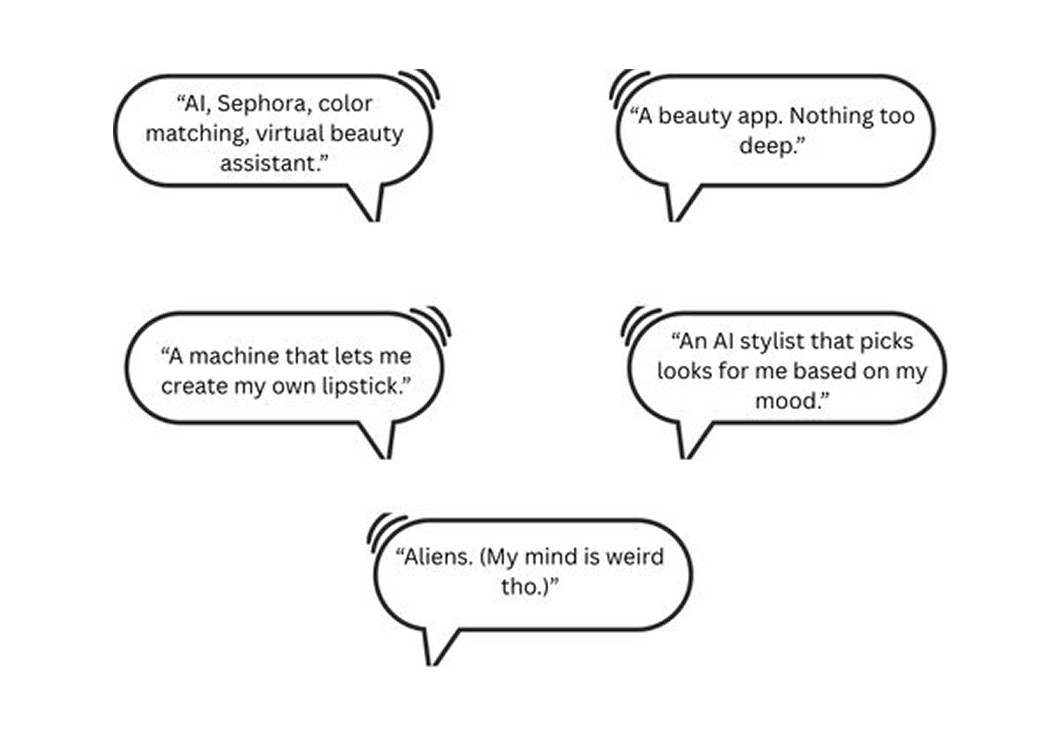
This showed me something important: most people don’t have a complex definition of beauty tech. They’re thinking about the tools they’ve seen, tried, or heard of. If it’s not accessible or visible, it’s not considered. That’s insight, not ignorance.
02: Filters: Confidence Boost or Confidence Trap?
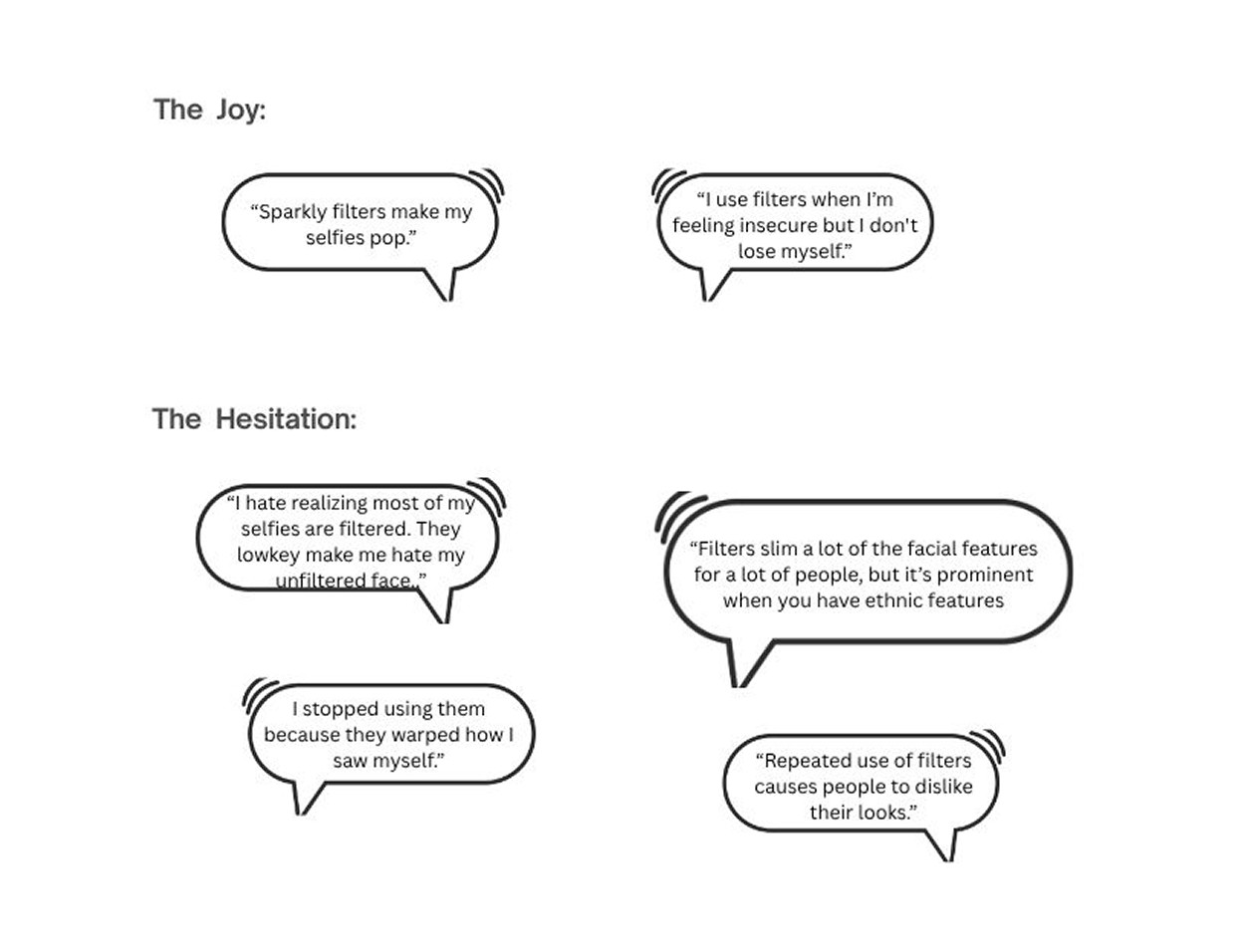
Every single respondent had something to say about filters. Some love
them. Some fear them. Most fall somewhere in the middle.
Top associations:
Sephora
AI
Color matching
Beauty apps
Filters
Virtual assistants
Augmented reality
The Reality Check:
Sixty-two percent said they’re concerned about the psychological effects of using filters too often. That tension (between fun and false reality) is where much of the friction in integrating beauty tech into the world resides.
03: AI Tools People Want
I asked everyone to dream a little: If you had access to AI tools like Cher in
Clueless, what would help your beauty routine?
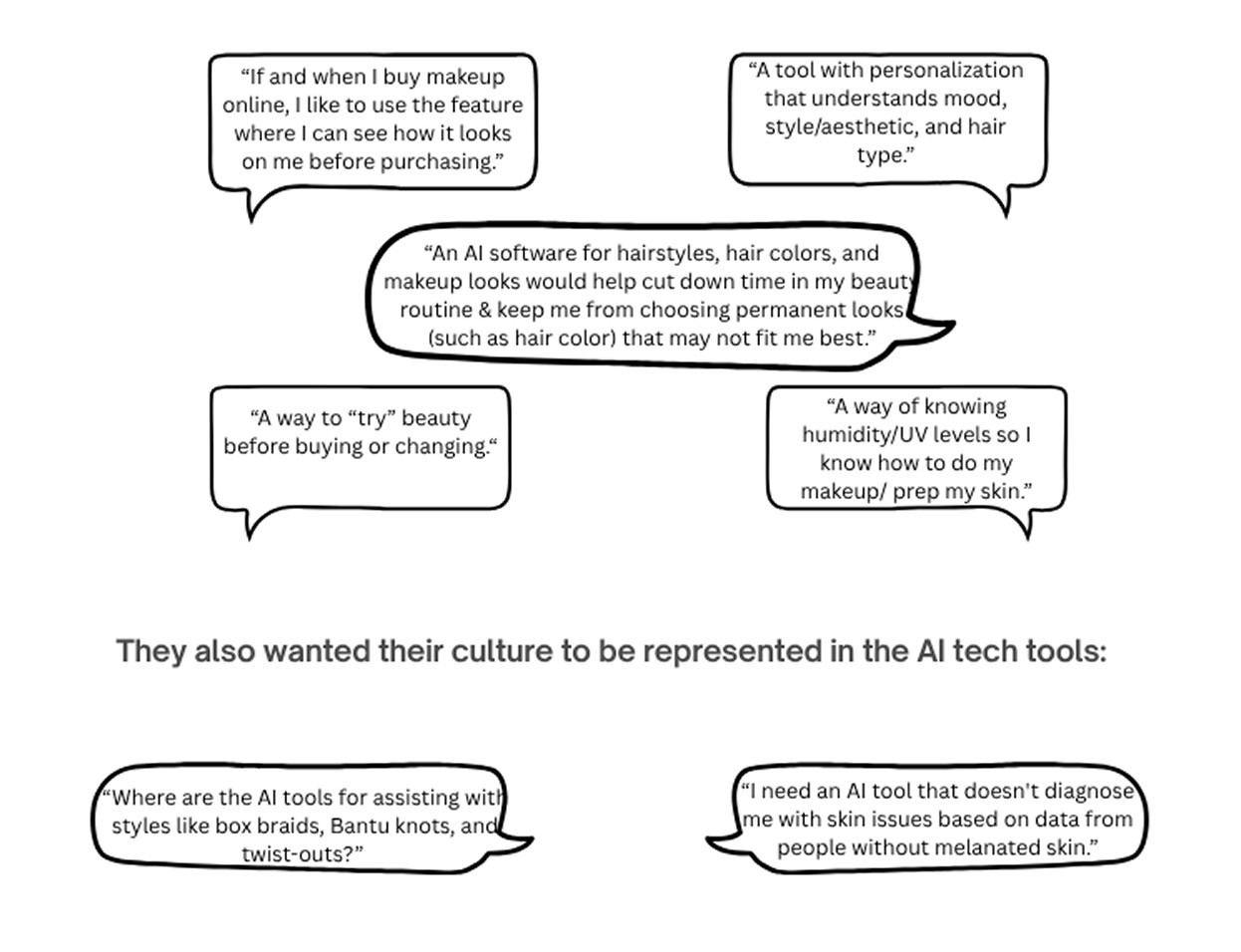
They’re simply not asking for filters to perfect themselves and tools that
recognize their individuality. For them, beauty technology shouldn’t be about luxury but rather about access, efficiency, and authenticity.
04: What’s Hot, What’s Not: Trends People Are Noticing
Twenty-eight participants shared their thoughts on the beauty trends they’re currently seeing and their opinions on them.
What’s Loved:
Tooth gems
Lipliner/ lip combos are going viral for women of color.
Rosemary oil can be used as a substitute for products like minoxidil to promote hair growth.
Using natural ingredients like sea moss masks for skin health
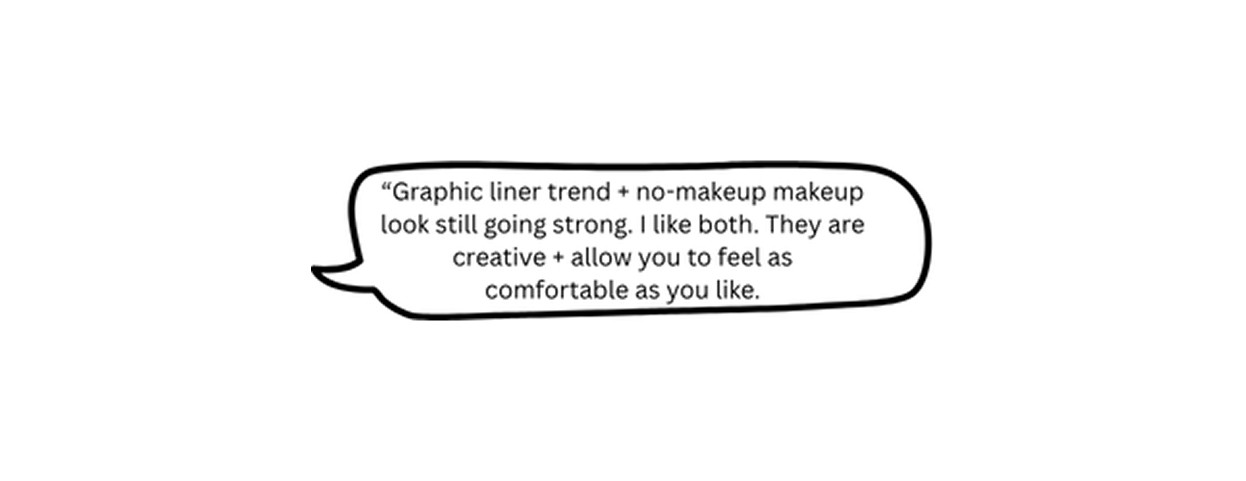
What’s Questioned:
The validity of “trends” that take away from personalization and end up making everyone look the same or aesthetically homogenous
Overhyped, recycled trends
There is minimal room for actual experimentation.
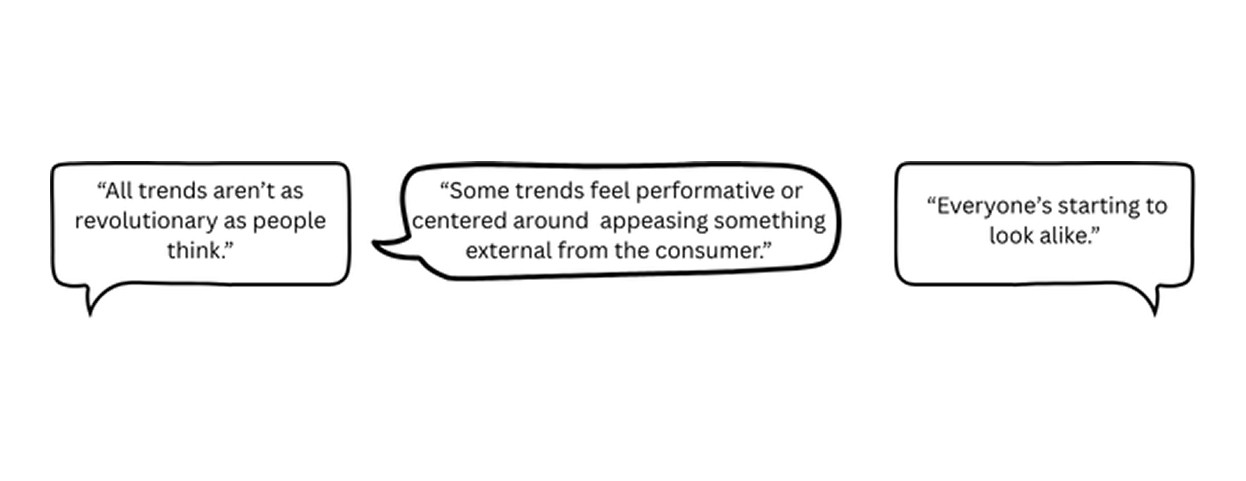
This suggests that a noticeable trend of fatigue is setting in, indicating a
collective yearning among individuals for deeper, more meaningful content
rather than a mere focus on superficial aesthetics. People are increasingly
seeking authenticity and substance in their experiences, relationships, and
the products they consume, reflecting a shift in priorities from fleeting
trends to lasting value and genuine connectivity and belonging.
05: What’s Missing in the Beauty Space (And Why It Matters)
twenty-nine people responded when asked: What’s not in
mainstream beauty that should be?
What they want more of:
Beginner tutorials
One-step beauty routines
Less gatekeeping of information
Natural hairstyles + real texture representation
Cultural visibility without tokenism
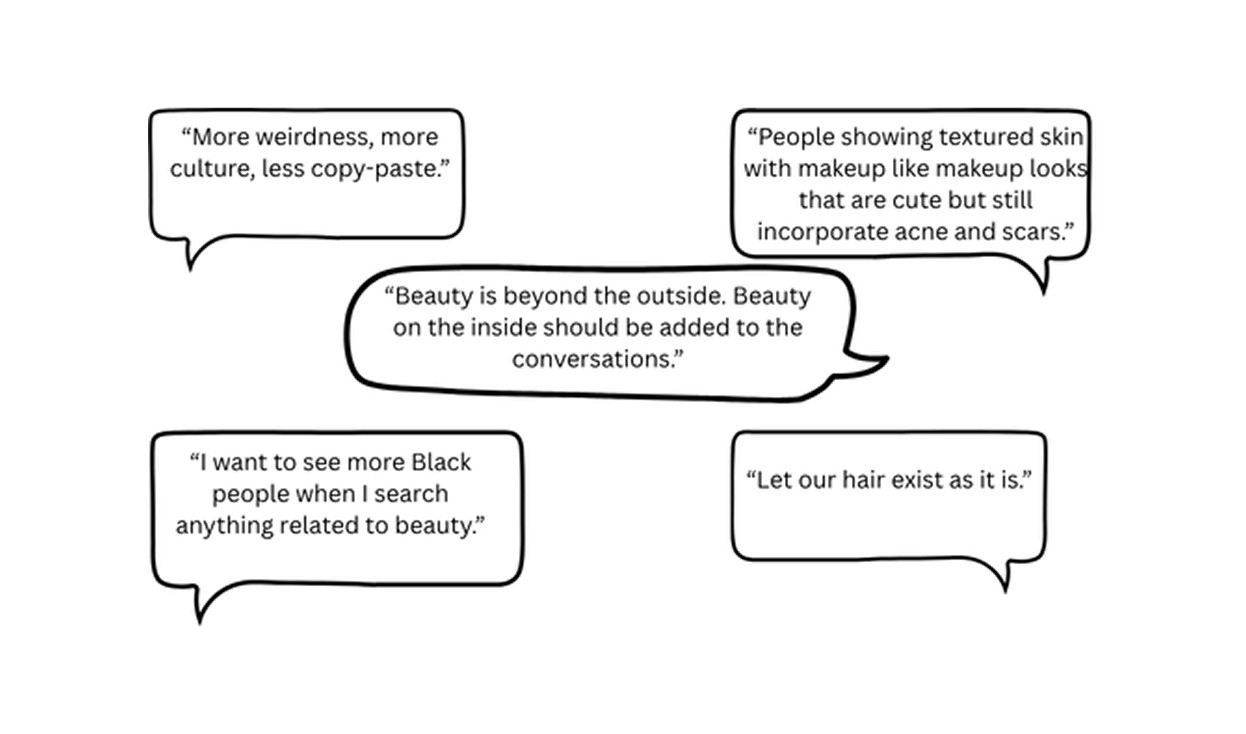
This conversation extends beyond mere visual appeal; it delves into the
essential themes of access, inclusion, and personal agency. It underscores
the importance of creating environments where everyone feels welcome
and empowered to participate fully.
06: The Future of Beauty Tech (As They See It)
Twenty-eight respondents shared their vision of the future when asked how they would shop for beauty products if they were to travel into the future in a time machine. How would people express their beauty, and no one imagined a
dystopia? They imagined tools that respected them.
Hopes:
Clean, ingredient-forward products
AR try-on before purchase
Skin scanners and smart recs
The tech that reflects a mood, not just skin tone
Fears:
Unrealistic beauty standards are getting worse
Tools that erase individuality
Too much curation, not enough self-expression

THE BIG PICTURE
Across all the questions, something consistent emerged:
People want to feel seen.
They want tools that feel like extensions of their creativity, not masks.
They want beauty tech that fits into their world, not the other way around.
Although not a tech-savvy crowd, they brought valuable insights, a clear vision, and meaningful boundaries that greatly enriched our discussions.
So What Now? (For Brands, Creators, and
Technologists)
If You’re Building:
Make your tutorials make sense. Start with the basics.
Don’t just use diverse models, BUT use diverse data sets.
Run your tools past real users, not just your product team.
Design for expression, not perfection.
If You’re Buying/Using:
Slow down before posting a filtered pic. Ensure it’s a decision you’re making for yourself, not based on others’ perceptions.
Use feedback forms (yes, companies do read them.)
Share your beauty tech wins and fails with others. The community is watching and learning as well.
WHY THIS STUDY MATTERS
Beauty tech transcends mere trends; it embodies empowerment, trust, and genuine transformation. If we don’t include those passionate about these innovations, we risk losing the magic that makes it all worthwhile!
As one respondent said:
“Make it about me, not influencers.”
This is your primer. The start, not the conclusion. Keep building. Keep asking. Keep centering the people beauty tech was made for.
NEXT STEPS
This moment was more than just a routine check-in; it was a powerful call to action.
These 30 voices have provided us with invaluable insights into what’s thriving, what areas need attention, and where misconceptions still linger in the beauty tech industry. Now, let’s embark on an exciting journey together to enhance our understanding and impact.
01 Deepen the Inquiry
The energy was palpable, and as we move forward, we’re committed to gaining deeper context. It's essential to explore how age, race, income, and identity influence experiences with beauty tech. Our aim is to uncover the rich layers of these experiences, not to categorize them.
02 Visualize the Data
Words are powerful, but visuals resonate deeply. The Cosmetech Case will deliver an engaging insight report for brands, creatives, and the curious. Look
forward to inspiring quotes, emerging themes, striking visuals, and cultural insights that capture the landscape.
03 Create Space to Build Together
This isn’t just research—it’s a launchpad. We’re inviting
community voices to help imagine what beauty tech could
look like. Through curated sessions rooted in reflection,
culture, and creativity, we’ll prototype the future together.