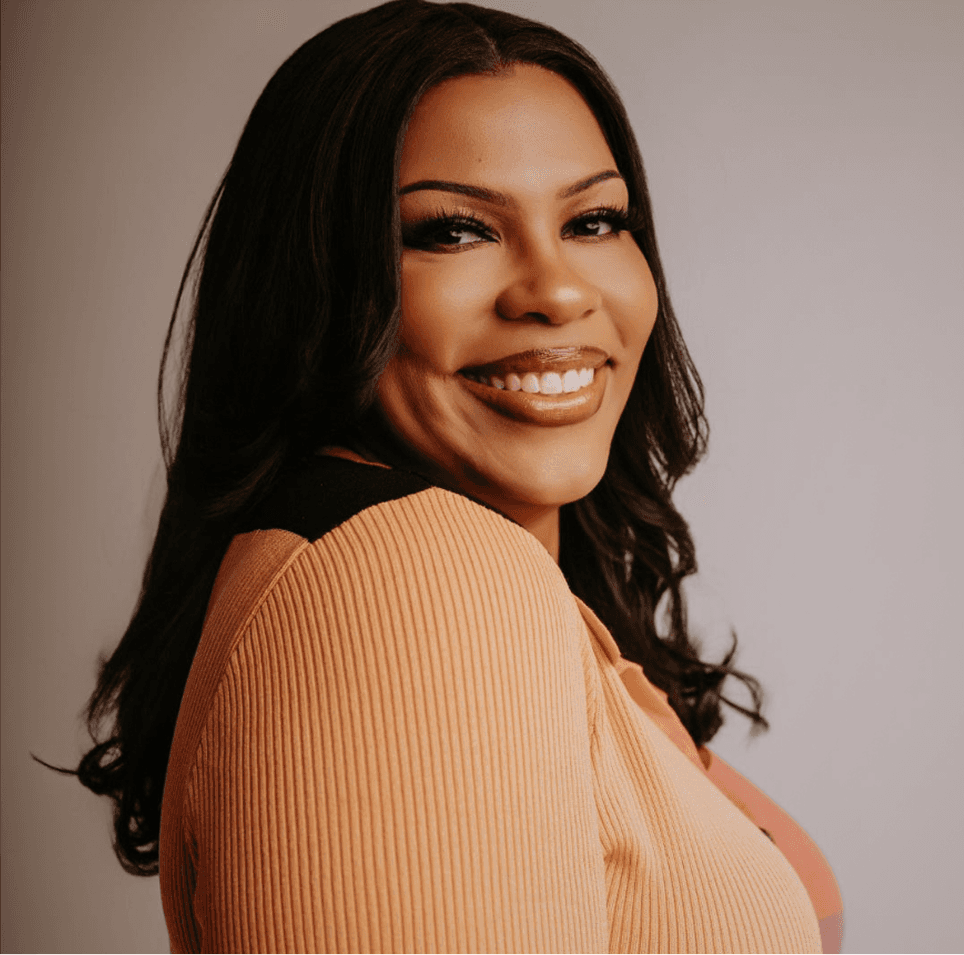
CEO
Love, Tech, and the Perfect Moisturizer
How Steven Mason Turned a Gift for His Wife Into a Beauty Brand Rooted in Love, Legacy, and Technology
8 Min Read

Feb 14, 2025

Steven Mason
Happy Valentine’s Day, beauty tech lovers! Whether you’re spending today with a lover, your besties, or indulging in a self-care session with a sheet mask and a glass of wine, one thing is clear: love is the ultimate form of innovation.
The love we share with our people. The love we show ourselves. Yep, it’s all innovation—it takes creativity, solves problems, adapts, and builds something new. When love is poured into something real, it transforms that thing into something even more meaningful.
For Steven Mason, that love became HerSkin.
It all started as a gift. Seeing the lack of skincare research and testing on melanated skin, Steven Mason took matters into his own hands. He hired chemists, researched formulations, and created something just for his wife. What began as an act of love turned into a science-backed beauty brand dedicated to proving what truly works.
But HerSkin is more than skincare. It is a love story. It’s about legacy, representation, and rethinking what it means to center Black women in beauty.
This Valentine’s Day, I sat down with Steven Mason to talk about how technology, cultural connection, and love are shaping the future of beauty.
Tap in for the full conversation below. And remember, whether you are treating yourself or someone else, skincare is self-care and self-care is love.

Bryana: HerSkin began as a heartfelt gift to your wife, addressing the unique needs of melanated skin. How has this foundation of love and personal connection influenced the brand’s approach to integrating technology into skincare?
Steven: That’s a good question. Honestly, it all started as a gift for my wife. I never set out to build a skincare brand. I just wanted to create something that worked for her.
I never even planned to make it a company. At first, I just hired some chemists to focus on her skincare needs because I saw the huge gap in beauty when it came to products made for Black women and women of color.
Being in the beauty industry, I got to see just how inequitable things were, not just in what was made for women of color, but in what was actually tested on them. A lot of products are marketed to Black women, but they were never formulated with us in mind or tested on our skin.
One of the first things I came across in skincare technology was 3D moisture mapping. A company I worked for used it to test a product, and for some reason, the data showed that the more melanin someone had, the better their skin retained moisture. That should have been a huge discovery, but nobody cared to figure out why. I kept telling brands, you should test this, you should study it. But no one was interested.
So when my wife decided she wanted to turn this into a company, I knew we had to do things differently. I bought a warehouse, a building, and a lab, and we made it real. Now, we are using 3D moisture mapping to prove that HerSkin products actually work for melanated skin.
And getting these tests done was not easy. When I reached out to labs for clinical trials, I told them, I want this tested on a diverse group of women, Black women, Latina women, Asian women, and white women, so we can get real, evenly distributed results. They told me they could do it, but it was going to cost more.
I ended up paying extra just to ensure that Black and Brown women were included in the testing.
But now, we are doing it our way. We run our own clinicals, making sure our hydration cream does exactly what we say it does, hydrate the skin. I always say, hydrated skin is happy skin. That is especially true for Black women. Hydrated skin helps prevent things like irritation, bumps, and dryness, all the things we are trying to address with HerSkin.
We are also working with Ade from Faculty of Skin on expanding into AI-powered skin analysis, where you will be able to go to our website, scan your face, and get personalized product recommendations based on your skin needs.
And at the heart of all of this is love.
The first product we released is called the I Love You Cream because it started with my love for my wife. That love is what built this brand, and now, my wife is sharing it with the world.
Bryana: How do you believe technology enhances the expression of love and care in skincare, both in personal routines and in HerSkin products?
Steven: If you create something with love, it is already meaningful. But technology gives us a way to show that love.
I can say, hey, I love you, I built this brand for you, Black women, but if I cannot prove it, if I cannot show that our products work, then what is the point?
That is where science comes in. We scan your skin, we do the tests, and we make sure we can stand behind everything we say. And that is what we are doing. It is not just me, it is my wife, and it is our chemist. We are actively proving our love to Black women through science. We are testing these products, perfecting formulations, and making sure we create something with them and for them.
Beyond product development, social media and digital technology have created new ways to connect. That is personal for me. My wife and I just became dual citizens of Ghana, and part of that was about strengthening ties between Black entrepreneurs here and the women producing Shea butter in Ghana.
Instead of sourcing ingredients through middlemen or big corporations, I went directly to the villages where the women make the Shea, learning their beauty rituals and supporting their businesses. That would not have been possible without technology making those connections visible.
So for me, technology is not just a tool, it is a bridge that brings us back to our roots.
Bryana: Considering HerSkin’s commitment to luxury and inclusivity, and knowing that bias, lack of funding, and other challenges negatively impact research and knowledge on black skincare, how do you see advancements in beauty tech fostering deeper connections and more personalized experiences for people with melanated skin?
Steven: Any beauty company that isn’t moving toward hyper personalization is going to lose. That’s just where the industry is headed.
We started HerSkin with one hero product, a hydration cream, because hydration is the foundation of healthy skin, especially for Black women. But we know skincare is not one size fits all, so we are expanding with boosters, serums tailored to unique skin concerns.
And here is the thing. The data has always been out there. Black women have been vocal about what they need, whether it is hyperpigmentation treatments, acne solutions, or deeper hydration. The problem is that brands were not listening.
Social media has given a voice to communities that have not always had one. It has allowed us to connect directly with our audience, hear their concerns, and respond with solutions made specifically for them. We may not have the massive data sets that big corporations do, but we have real people telling us exactly what they need. And that is what we are building products around.
At the end of the day, technology should serve the consumer, not the other way around. It is about making sure our people have products that are actually formulated for them, not just marketed to them.
Bryana: Love and legacy are central to HerSkin. As a Black innovator in beauty tech, how do you see technology preserving and elevating self-care rituals in our communities, both through your everyday experiences and traditions like what you learned in Ghana?
Steven: What took us to Ghana was the Year of Return in 2019 when they were calling on people to come back. We did not make it that year, but we finally went in 2023. Now, through technology, Black and Brown communities around the world are more connected than ever. The African diaspora is truly linked.
Technology helps preserve culture by allowing us to learn in ways we never could before. It gives us access to knowledge that was once out of reach. But learning is just the first step. The second step is execution. Once we have that knowledge, we can act on it. We can ask, what can we create as Black entrepreneurs and Black business owners? What can we build in spaces that were not originally made for us?
Then there is legacy. What do we pass on? What do we leave for the next generation? At the end of the day, I will leave my children not just businesses, but knowledge. Technology has connected us in ways we never imagined. It provides both the information and the tools to execute.
I do not have to go to a multinational company to buy my Ghanaian Shea. I can go directly to the women in Ghana who produce it. That is the power of connection. And for me, the biggest gift technology has given us is exactly that, connection.
Bryana: If there is one thing people should know about HerSkin, what would it be?
Steven: People need to know that my wife has poured her entire heart and soul into giving this to the world. To this day, she still writes a message on every single card that goes out with a product. She designed the packaging and tested everything herself. It took two years to launch because she refused to release something she did not personally stand behind.
When she named the I Love You cream, it was her love letter to the world. I wrote a love letter to her with this brand, and now she is writing one to every Black woman who needs it.
She takes this seriously. Every product is tested, and the only way to do that right is through technology and its advancements. That is why we do this.

Bryana Ellis
8 Min Read
Feb 14, 2025
The Founder of The Cosmetech Case decoding how beauty, tech, and culture influence who we are and where we’re headed


Subscribe to The Cosmetech Case
A newsletter by the Cosmetech Case decoding how beauty, tech, and culture influence who we are and where we’re headed.