Founder
Sakeya Donaldson on Mentorship, Possibility, and Designing New Futures in Beauty and STEM
A conversation about purpose, pivots, pouring into the next generation, and showing the next generation that beauty can lead anywhere.
11 Min Read

Aug 29, 2025
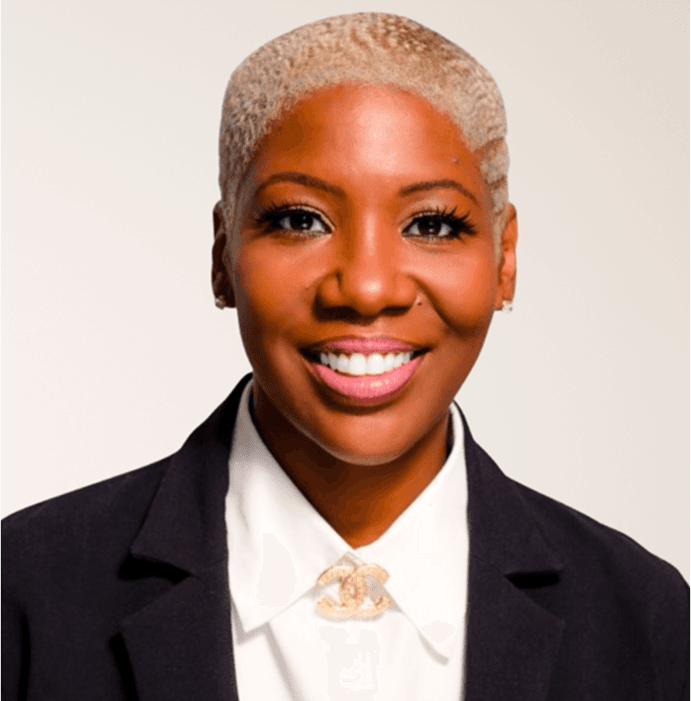
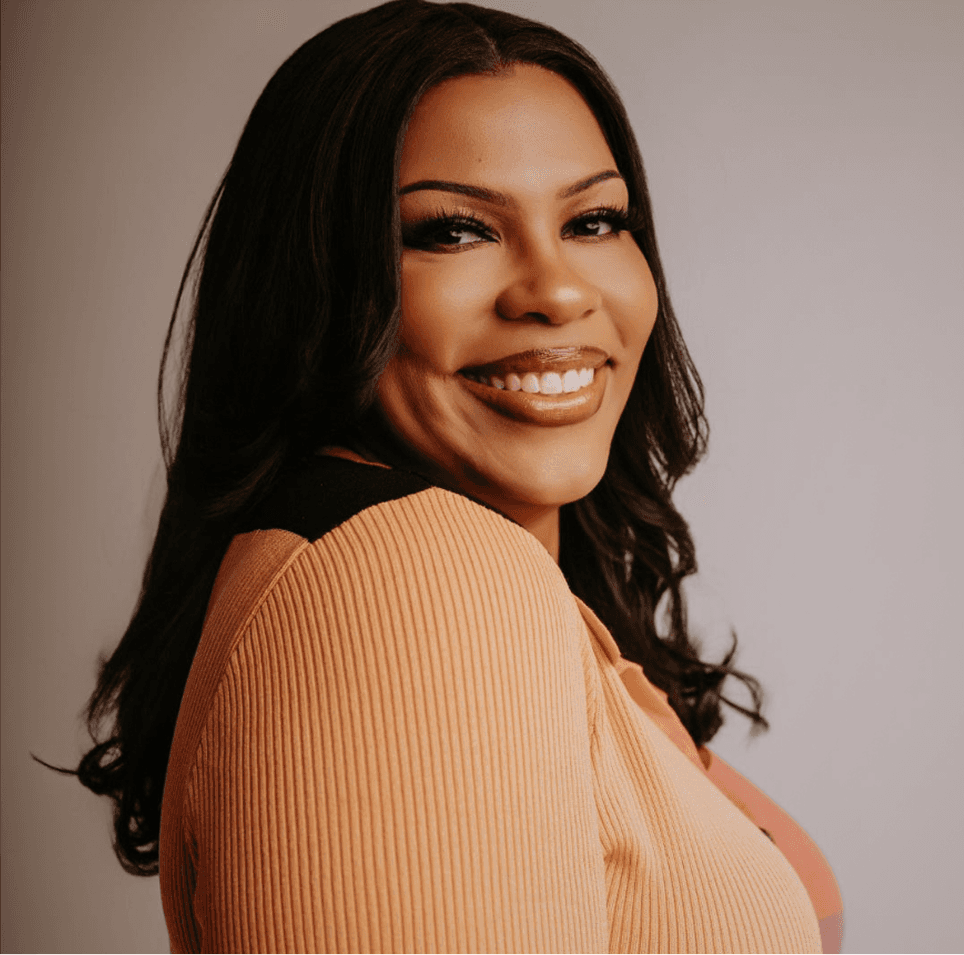
Sakeya Donaldson
I connected with Sakeya Donaldson on LinkedIn after learning about The Science of Beauty STEM Program. I reached out cold, and she responded with genuine warmth, agreeing to an interview almost instantly. Before we even got into the official conversation, we were already deep in reflection about perfectionism, mentorship, and starting before you’re “ready.” She reminded me that every GOAT starts as a rookie.
Our interview unfolded into a layered, energizing dialogue. Sakeya shared how a single moment in her fashion career led her to reevaluate her impact, which in turn inspired her to build a national STEM program for girls, rooted in beauty, confidence, and cultural relevance.
We discussed what it means to shift the narrative from styling celebrities to shaping futures, why mentorship is non-negotiable, and how luxury, STEM, and legacy intersect in her work. Sakeya shows up unapologetically and invites young girls to do the same.
Let this story remind you of the power of building your own lane and inviting others to join you.
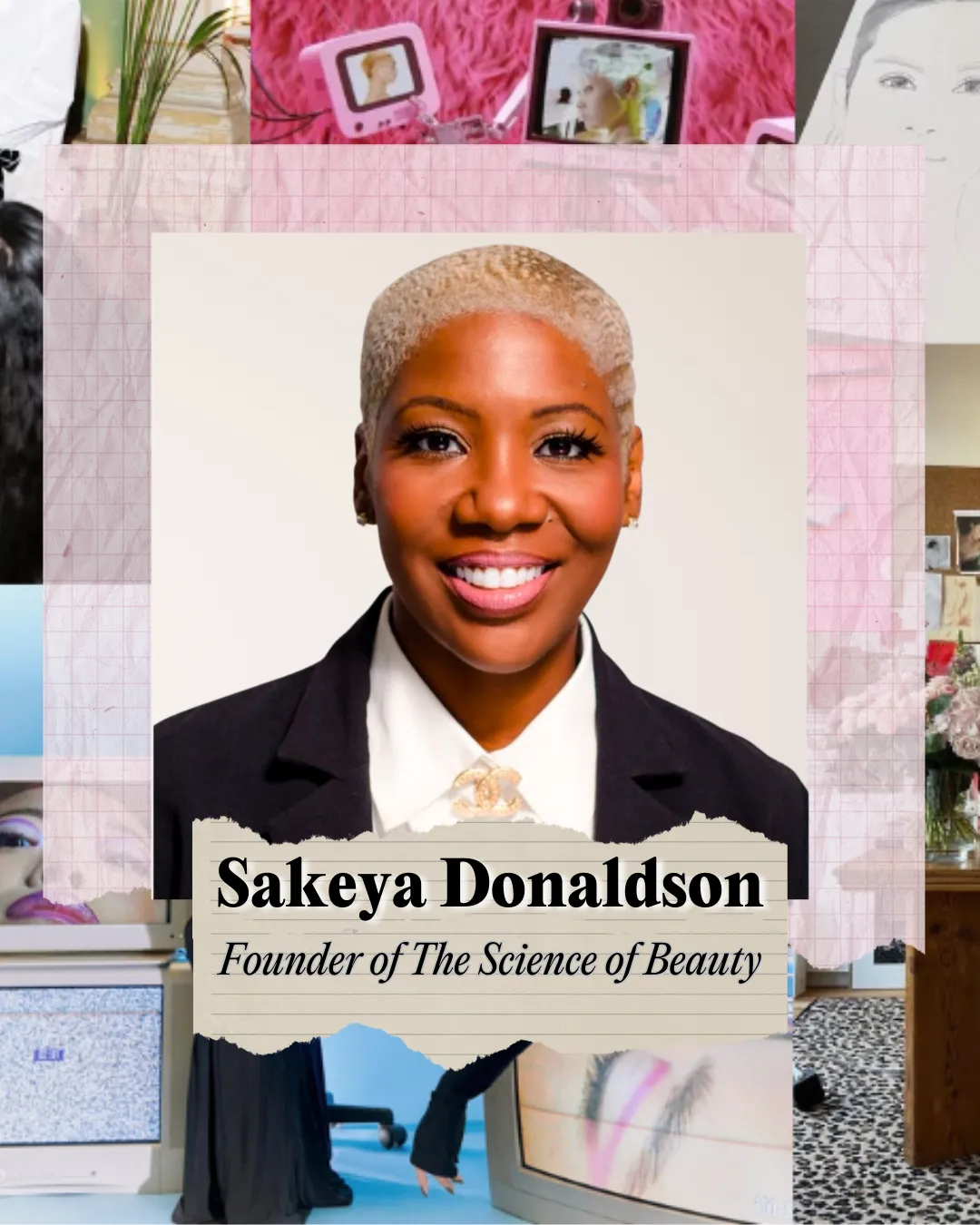
Q You’ve moved through fashion, media, and STEM—industries that don’t always intersect, but all shape how we experience beauty. Was there a moment in your career that shifted how you see the future of beauty, especially through the lens of technology?
“When I first started, I didn’t really see how those lanes could merge. But now that I’m in the STEM space, I realize everything came together because of my background in fashion. I worked as a wardrobe stylist, and I collaborated with hair stylists and makeup artists for my clients. That was more of the front-facing side of things.”
We never really explored the backstory of cosmetics, hair products, and similar items. What shifted my perspective was a conversation I had with a colleague I had worked with on several projects. He was a video director, and he commented on how we, as creatives, have to take some responsibility for the generation that is growing up now. He said it critically, and I asked him what he meant.
He responded, “Sakeya, how many projects have you worked on where women were portrayed in an unflattering light? Think about the times you styled them in revealing outfits for video sets, photo shoots, and similar events. If a girl was ten years old and taking in those images, and now she’s twenty-five, those are the visuals she has connecting body positivity, confidence, and success. That’s what she’s been fed through the media.”
That conversation shifted something for me. It made me realize how fashion, media, and STEM are deeply interconnected. That was a turning point, because just by the nature of my work, I am an influencer. If I’m styling someone like Nicki, and I put her in a dress with pasties, 100 million people are going to see that.
It’s not just about her being the influence. In reality, I’m the one making those choices behind the scenes. She is the platform, but I am shaping the message. That made me think, if I can have this kind of impact in a way that might not always be positive, how can I shift the narrative? That is when The Science of Beauty started to take shape.
I began thinking about how I could use my influence to uplift young women. Life is about balance. I’m not saying that part of my journey was wrong, but I recognized the need to balance it out with something that brings value and purpose. That was the spark. That was my turning point.
Q Between your concept of ‘Colossal Her’ and The Science of Beauty STEM Program, you’ve built spaces where young women can embrace confidence and innovation. What are some of the biggest myths or barriers about beauty and power that you work to dismantle? And what made you realize this work had to happen?
For the “Colossal Her” part, I recall creating that mantra while I was part of a group of young women in 2022. I had just completed my first summer program with The Science of Beauty. As the year drew to a close, we gathered to reflect and share our visions for 2023. We each had to go around and share one word that captured our vision for the new year. My word was “Colossal.” At the time, I didn’t know exactly what that would look like. I just knew the first program had been incredibly successful, and I had received a lot of positive feedback.
I was confident that if I kept going, it would grow even bigger. And it did. 2023 was a fantastic year for me, both personally and professionally, as well as for the program.
Heading into 2024, the mantra became “Colossal-er,” which is where the play on “Colossal Her” comes from. 2023 was big. Now we were aiming even higher. In 2024, I partnered with Spelman University, and we hosted a week-long summer program on their campus.
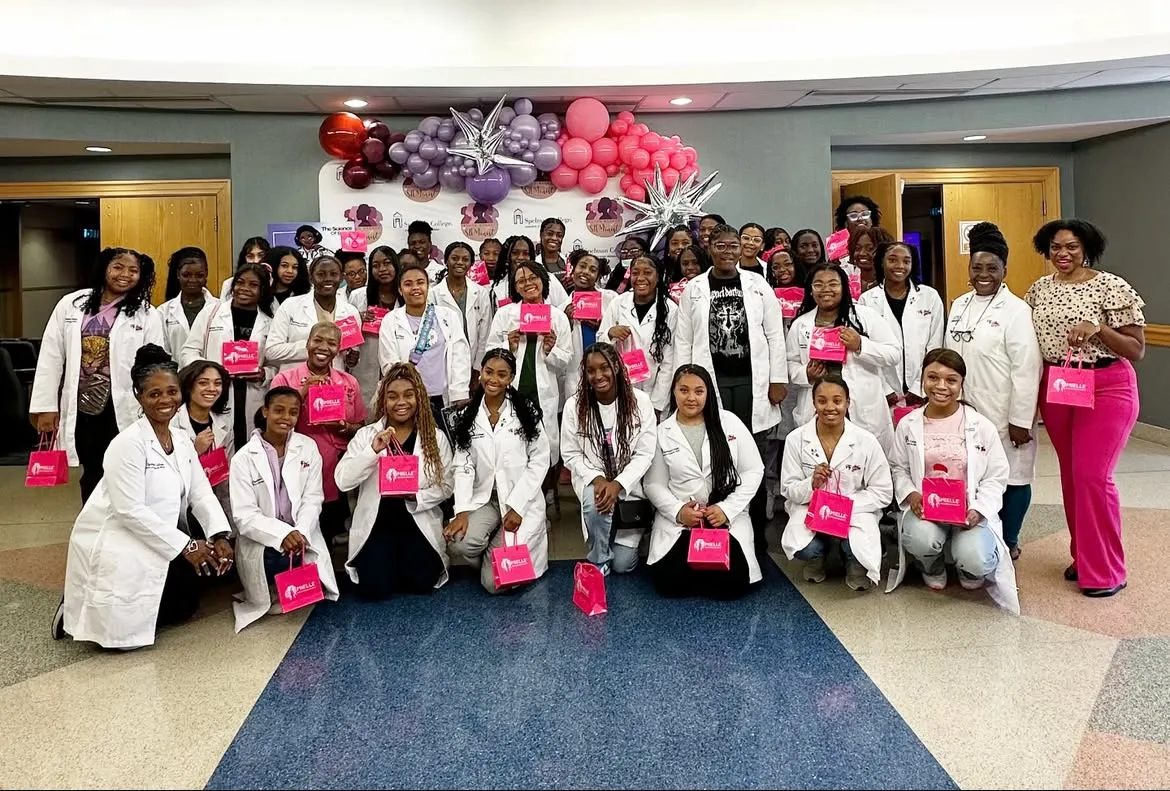
2025 is Colossal. It is set to be the biggest year to date. This year, we embarked on a five-city tour of HBCUs for The Science of Beauty program. As you can see, from 2023 to 2024 to 2025, the program has continued to evolve and expand. That is where the colossal mantra comes from. I believe in doing things at the highest level, with full excellence, and using every resource and connection available to me.
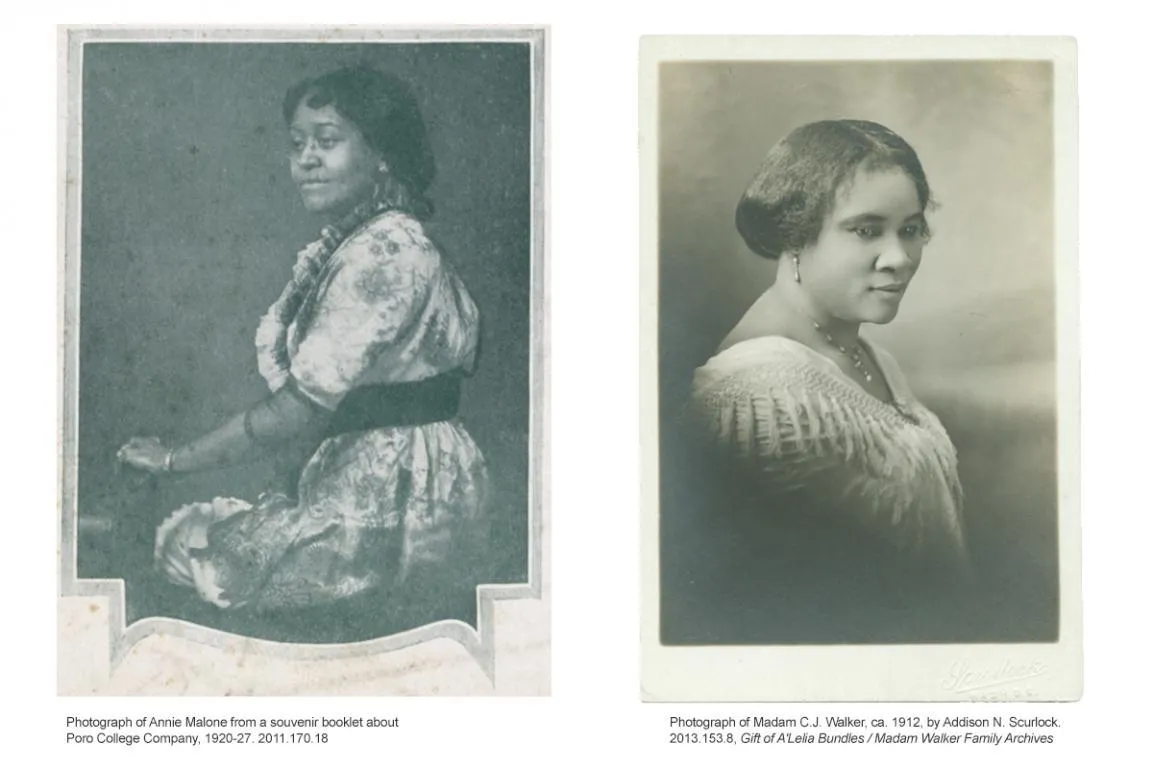
In our community, we’re often given what’s left over—bare minimum resources and attention—when we deserve excellence just like anyone else. It’s like, NO, we lit and it’s up, and that’s just how we’re gonna move, right? So that was that. As for what led me to realize this work had to happen, it occurred during my first year of programming. When I began studying The Science of Beauty, I had no idea what I was doing.
(Referencing some encouragement she gave me before the interview began) — That’s why I told you, you have to put one foot in front of the other, and things will start to happen. My background isn’t in science or tech; it’s actually in marketing and fashion. When my aunt first approached me about starting the program (she oversees the nonprofit that houses The Science of Beauty), I avoided her for almost a year. I was like, ‘STEM? I don’t know anything about that… I’m thinking stem cells!’
I didn’t see the connection. I kept brushing it off, like ‘Yeah girl, this is not really happening.’ But she was so persistent. Eventually, I sat down, did the research, and realized what STEM actually was and once I saw the possibilities, I thought, ‘Okay… yeah, I can do this.’”
During my first year of programming in Tampa, my first major corporate sponsor was Neiman Marcus. That came from me going into the store here in Tampa. I had shopped there before, so I already had a relationship with them. I just talked to them about what I had going on, and they came on board. I remember the day they came to the camp to give a presentation. They actually brought Chanel’s global skincare ambassador to introduce a new product line they were launching called Sublimage
One of the young ladies at the camp was volunteering, and her great-grandmother was there with her. While the presentation was happening, I was walking around to make sure everyone was okay, and I noticed her great-grandmother looked emotional—her eyes were misty, as if she were about to cry. I asked, “Are you okay? What’s going on?”
She said, “You know, when I was Zuri’s age”—Zuri being her great-granddaughter—“I wasn’t even allowed to go into a store like Neiman Marcus.” And she didn’t say she couldn’t afford it. She said she wasn’t allowed.
Now we’re referencing back to the era of Jim Crow and segregation, and she’s making me think how for them to be here with a room full of black and brown girls, exposing them to luxury, those are things that she never thought she would have seen in her lifetime. When she said that, it made me realize the impact of this work.
I just wanted to get some girls together, have fun, and make some beauty products. I didn’t initially understand the significance of it. I’ve heard so many stories from parents about how the program has instilled confidence in their students, and that’s the basis for the program. STEM is a challenging subject, and many young girls shy away from it due to limited representation, low confidence, a lack of mentorship, and inadequate resources. When I talk to people who’ve found success in this space, their paths are rarely linear. There often weren’t mentors they could look up to, especially in cosmetic chemistry.
My goal is always to equip girls with the self-confidence to pursue whatever they want, whether that includes a career in cosmetic chemistry or not. When you have the confidence to push through challenges, you can break barriers. That’s the heart of The Science of Beauty: helping young girls recognize that their skills are powerful and transferable across any space they choose.
Q Beauty isn’t just about products or trends; it’s about who has access to knowledge and opportunity. How do you see mentorship and education reshaping the future of the industry, especially for young women entering beauty and STEM? And what kinds of new pathways do you think still need to be created?
For me, mentorship and internships are vital. I’m from a different era and area, so those things were everything. Even in my fashion career, my first mentor put me on tour with Usher for eight months as one of his stylists. At the time, nobody was bigger than Usher, and that experience shaped my entire trajectory. It gave me a bird’s-eye view of what true greatness and work ethic really look like.
The level of greatness Usher had and the work ethic it took to maintain it is something I witnessed day in and day out. These days, many in the younger generation don’t always recognize opportunity unless it comes with immediate gratification. I always say: to get into specific spaces, you have to give your way in, work your way in, or pay your way in. You must bring value to every situation. That’s an art form that’s becoming rare. Things move fast now, and people want results instantly but that’s just not how it works. You build by showing up, by putting in consistent effort. I always tell people: confidence comes from stacking small wins.
When it comes to creating new pathways, I reflect on my own experience sitting on advisory boards and working with numerous formal STEM organizations. Honestly, that’s part of what pushed me to start The Science of Beauty. I would be in these rooms, and everything just felt like it was going over my head. People were talking about becoming marine biologists, roboticists, coders, and astronauts—all these traditional STEM careers that didn’t resonate with me. I remember thinking, But what if a girl doesn’t want any of that? What if she’s more drawn to beauty and fashion?
I didn’t personally know many girls who dreamed of being coders, but I definitely saw them in line at Ulta. (Case in point: Look at how places like Sephora are becoming the new party destination for tween girls.) That made me think: How can we meet them where they already are? We don’t have to introduce them to something foreign; we need to flip the perspective on a space they already love.
That’s why I believe in soft entry points. The beauty industry is already familiar to these girls. At 10 or 11, they’ve got skincare routines. They’re spending their allowance or their mom’s money on products. Being a consumer is fun. But what if we got them curious about the other side? The production, the formulation, the innovation? If we reach them at that pivotal age, such as 11, 12, 13, or 14, we can open a new path into STEM that’s rooted in something they already feel connected to.
Q Women have always been the blueprint for beauty innovation, from ancient rituals to biotech-driven skincare. If you could elevate a cultural beauty practice with today’s technology, what would it be and why?
One area where I’ve really deepened my knowledge, primarily through this program, is skin health for Black women. And by skin health, I don’t just mean products or aesthetics. I mean, protecting our skin.
There’s still this huge myth in our community that Black people don’t need sunscreen. Where did that even come from? It’s so widespread. When I tell people I wear sunscreen daily, I get reactions like they don’t know what I’m speaking about. However, the truth is that we do need it every single day. I think many of us don’t fully understand our skin’s makeup, function, and what it actually needs to stay healthy and protected. That kind of knowledge is just as important as knowing which serum to use or which foundation matches your undertone. We deserve that depth of care, too.
I once had my skin analyzed using AI technology, which revealed areas of damage and even predicted the likelihood of future conditions based on its current state. That experience made me hyper-aware of how I care for my skin. We’re often great at following a skincare routine—making sure we have our serums, moisturizers, and foundation laid just right. But I don’t think we always pause to really understand what our skin needs beneath the surface. I want more of us to be equipped with that knowledge, not just for aesthetic purposes, but to protect the entire essence of our skin.
Q What’s the bigger story you’re telling through your work, and what’s something the world should know about your journey with The Science of Beauty that isn’t talked about enough?
The bigger story I’m telling through this program is about taking up space. I often find myself in rooms where I’m the youngest, one of the only Black women, or someone who doesn’t “look” like a typical STEM professional. That used to make me question whether I belonged, especially since my background is in fashion, not science.
I don’t have a PhD or a long list of credentials behind my name. But what I’ve come to understand is that my walk is different and that’s okay. I bet on myself, believed in my vision, and that’s what put me in those rooms. Some people might think I’m not qualified, but I am because I figured out how to do it my way.
You’ve got to figure out how to do things differently because it’s not going to look the same for everybody. And you have to show up as your authentic self. I moderated a panel last week at Georgia Tech filled with doctors and tech folks, and here I am—the fashion girl. I said, “Okay, I’m walking in with my fly fit, I’m doing my panel, I’m moderating my panel, and that’s just what it’s gonna be.” And that’s kind of become my signature. That’s just who I am. I don’t know how to be anybody else. I’m always open to learning. I’m coachable, I’m teachable and I believe those qualities can carry you across any space.
Showing up as yourself, being willing to learn, not shrinking just because you feel like you don’t belong or aren’t “qualified”… people don’t qualify you. You were qualified before all of this. You just have to walk in knowing your purpose. I’m not there to deliver a thesis on biodegradable compounds—I’m there to show up and shut it down. I understand my assignment, and I’m going to do what I came to do. A lot of people walk into these spaces thinking they have to become someone else to be taken seriously. That’s just not me. If there’s one message I hope to pass along through The Science of Beauty, it’s this: bet on yourself, believe in yourself, and then do the work.

Bryana Ellis
11 Min Read
Aug 29, 2025
The Founder of The Cosmetech Case decoding how beauty, tech, and culture influence who we are and where we’re headed


Subscribe to The Cosmetech Case
A newsletter by the Cosmetech Case decoding how beauty, tech, and culture influence who we are and where we’re headed.