Founder
Ryesha Blunt on Glam Engineering, Cultural Commentary, and Reclaiming Beauty Through Tech
An honest take on identity, influence, and carving space in beauty without shrinking to the fit the system.
11 min read

Aug 27, 2025
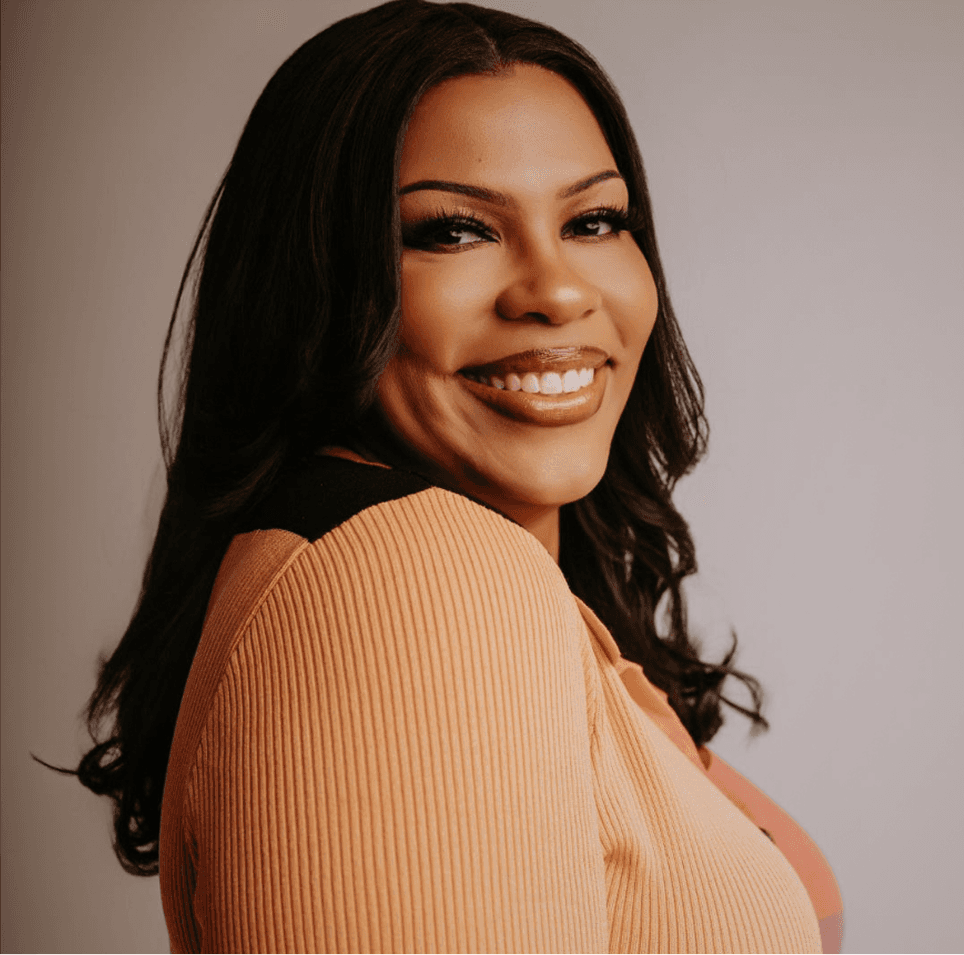
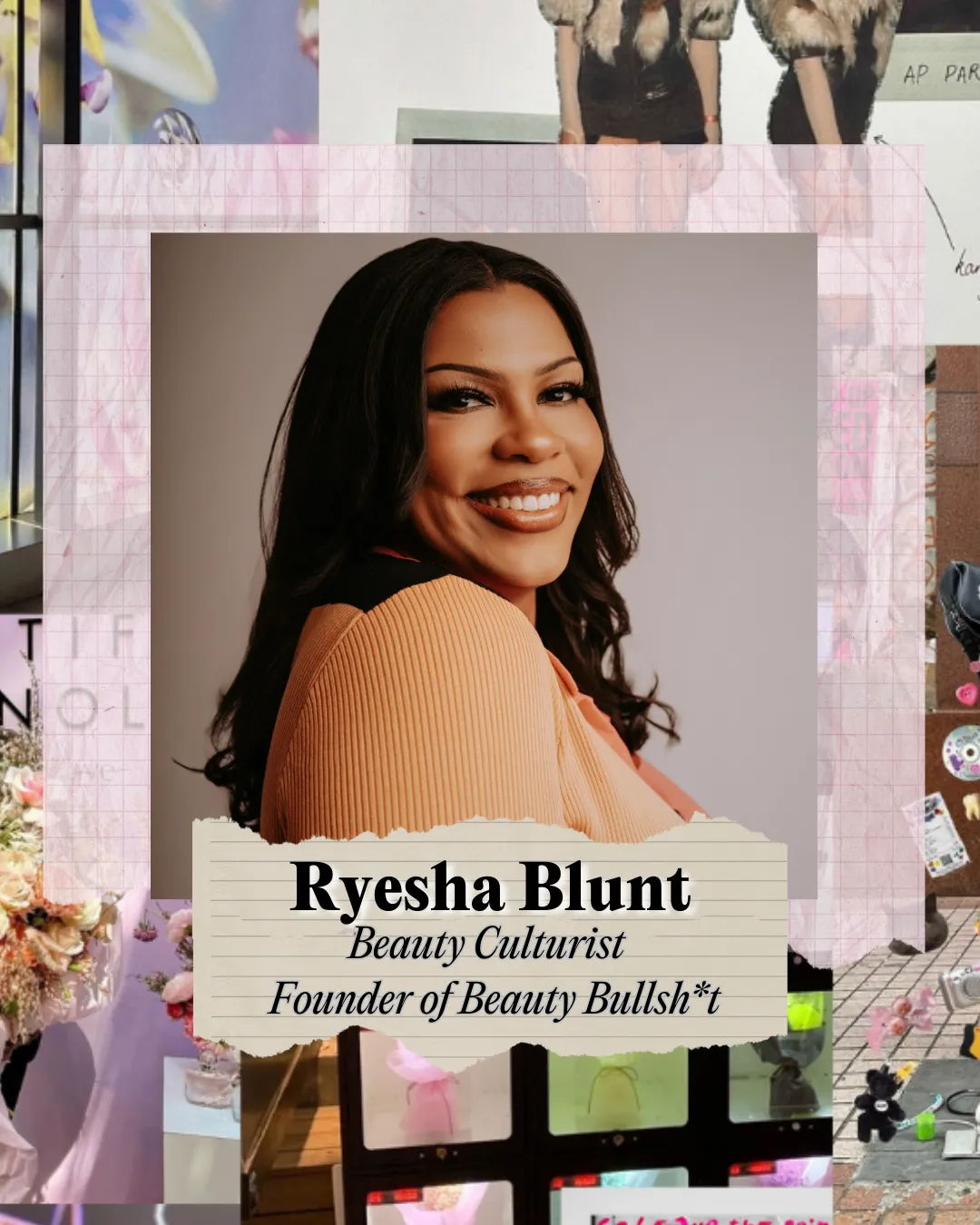
Ryesha Blunt
I discovered Ryesha Blunt’s LinkedIn writing during a moment of serendipity when the algorithm delivered an accurate recommendation. She had written an article about finding a mentor through beauty, which stopped my scrolling until I read her entire piece because she used clear language to express honest thoughts about beauty, the beauty industry, and how to be a learner in it. I sent her a message despite our complete lack of previous contact. She answered with genuine warmth while showing a clear purpose, which led us to talk a bit more.
Fast forward to this interview: an intimate, layered convo that still sticks with me. Ryesha defines herself as a glam engineer, which she created to transform how we understand beauty expertise. She has worked at Ulta, Salesforce, and Squarespace while maintaining her creative vision and analytical perspective.
We discuss what it means to witness beauty behind the scenes, how cultural context influences consumer trust, and why reclaiming the “soft” spaces in beauty is actually a radical act. She breaks down the impact of K-beauty’s rise among Black women, the politics of AI aesthetics, and how rage bait marketing gets weaponized.
Beauty carries layers: power, play, and the systems we move through daily.
If you’ve ever felt caught between being a consumer and a critic, or found yourself navigating an unconventional path through beauty and tech, you might find a bit of your own story reflected here.
Bryana: Every woman has a beauty story. It’s not just about makeup or products. It’s about the structures, traditions, and unseen forces that shape our experience of it. Was there a moment when you realized beauty wasn’t just something to participate in, but a world of its own, rhythm and rhyme, and with a deeper meaning?
Ryesha: I witnessed this when I was younger. I modeled for Design Essentials when I was 17 or 18 years old. During a campaign, I was able to see behind the scenes of hair, makeup, and costumes (which got me super excited, because I was a theater kid who had put it to the side), so being able to be in that environment made me really excited. I was like, “Oh my gosh. People make a career out of this!”
Then, when my husband and I moved to Colorado in 2021, it was during the pandemic, and I had been hired to be a CompTIA instructor at Red Rocks Community College. I had previously instructed at a community college. Still, I decided that it wouldn’t really pay the bills, so I turned that job down and ended up taking a job at Ulta, which didn’t pay the bills, but it was something a little more interesting and exciting to me. So I think that re-instilled in me the idea that, “OK, you may not be a hairstylist or a costume designer, but there are also people who are in corporate roles and are kind of creating their own careers.”
I realized that wasn’t for me. I think makeup artistry is more of a journey for me. However, I believe that witnessing it firsthand when I modeled for Design Essentials, and then in my career pivot working at Ulta, reminded me that there are many different career paths that people aren’t always shown in the beauty industry. It’s seen as somewhat vain, but some people build entire careers around it.
Bryana: You mentioned on your website that you are a glam engineer. I’ve never seen that term out in the wild…but it’s like, that’s how you choose to self-describe, and I love that. So what does that mean to you? If someone were to ask you to define a glam engineer, what would you say?
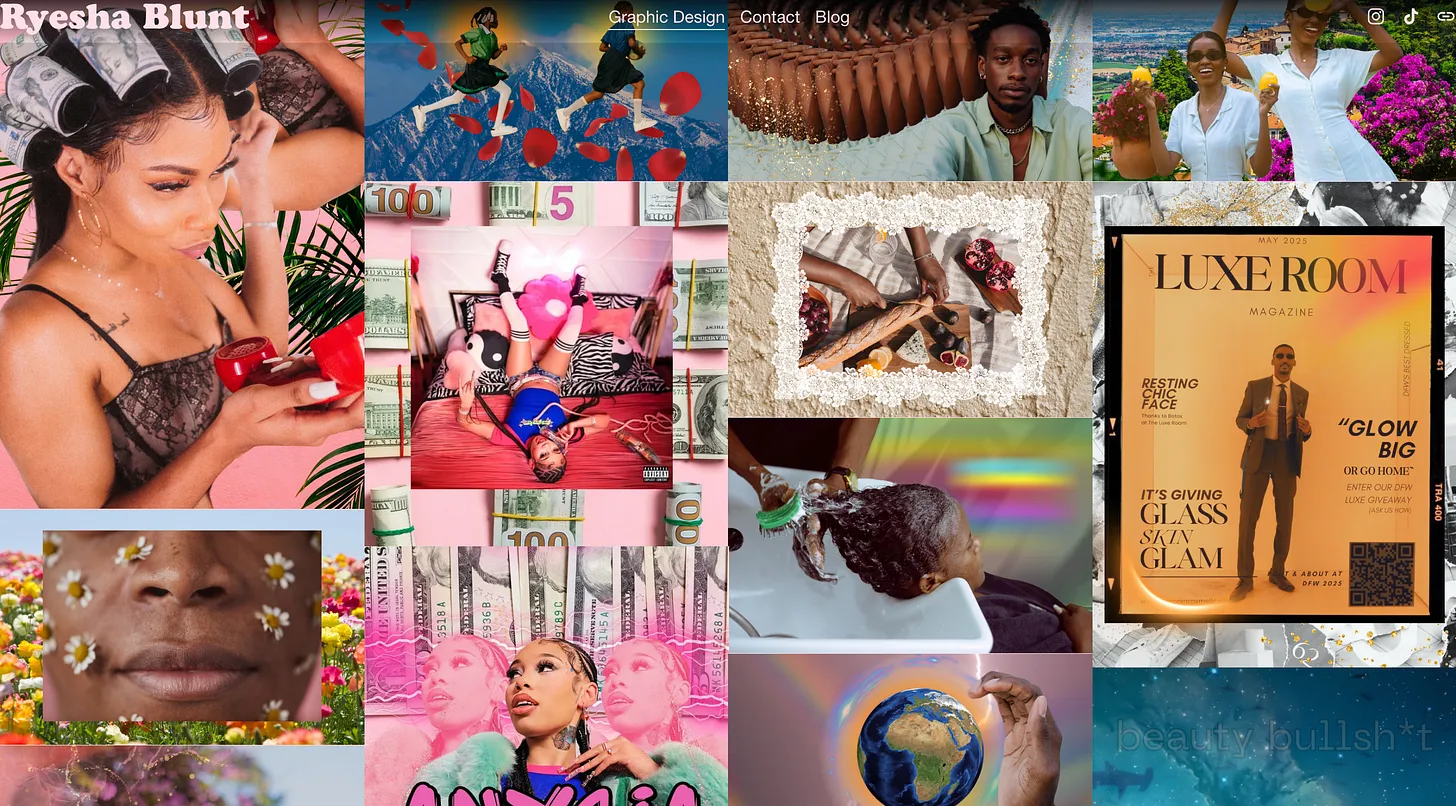
Ryesha: Having attended Purdue University, I was surrounded by friends who were engineers. I often felt like I missed out when I chose to study public health instead. The term’ glam engineer’ resonates with me as it signifies the intersection of technical and creative aspects in beauty, much like problem-solving in engineering. This perspective also challenges the notion that engineers are the most valuable and highly compensated, a stereotype I wanted to reclaim.
The term “Glam engineer” reminds me of being able to take charge and that beauty jobs can be both technical and creative, solving problems that engineers do as well. As someone who works at Squarespace, I sometimes feel that I’m not being paid enough. And then sometimes I’ll be talking to my husband, and he’s like, “Well, you know, they’re engineers, so they get paid a lot. There is an assumption that engineers are the most valuable and receive the highest compensation. I really wanted to reclaim that.
It also came from a Salesforce connection, as I transitioned into tech in 2019 and took numerous Salesforce classes. There’s a huge hub in Indianapolis, and they used to say that you could go from cashier to engineer, which I just loved. So I thought, ‘How do I make that for makeup?’ And I was like, a “glam engineer”!
Bryana: Through your blog, newsletter, and even posts like your LinkedIn insights, I’ve noticed how you forecast trends, especially around which beauty brands and creators consumers want to see collaborate. You’ve even called out rising subcultures like #304tok, which brings attention to beauty and hygiene hacks in ways that larger brands often overlook or struggle to navigate. It makes me think about your work, which sits at the intersection of beauty and culture in many ways, and those are two things that are always in flux. In that sense, how do you see beauty as a language that kind of inter-connects or weaves both beauty and culture together?
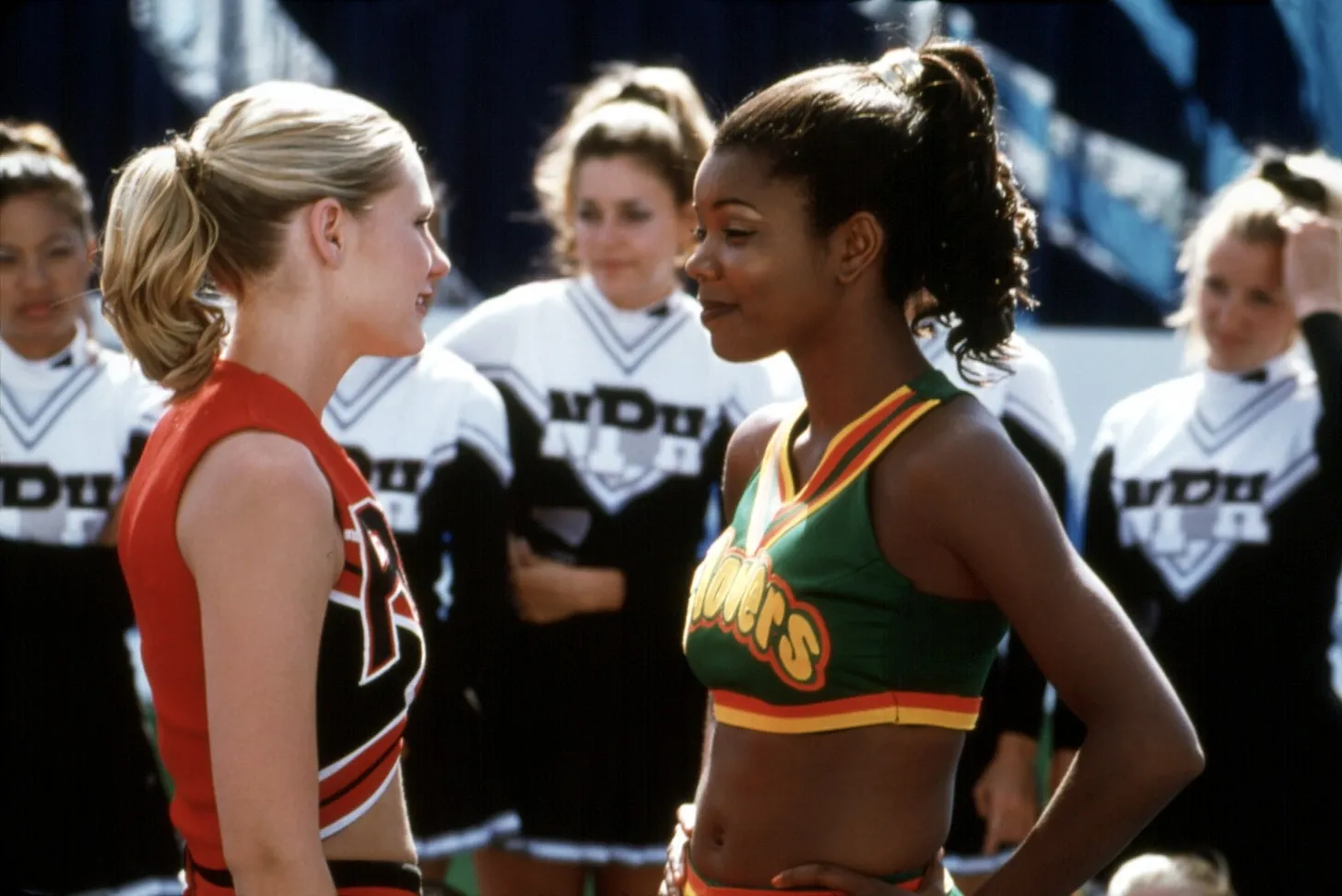
Ryesha:It makes me think about this revelation I had this morning about femininity and Bring It On, and why the film is such a cult classic. It discusses the intersections of how race affects a traditionally feminine activity, such as cheerleading, and how we often fail to envision the black cheerleader. But there are tons of black cheerleaders out there who are just as good at tumbling, just as beautiful, just as bitchy. I feel like, Bring it On was so “Black girls are feminine too,” and the white girls were shocked by how they approached beauty and cheerleading in their craft and that whole industry, and how they made it their own thing, and they’re in entirely different worlds. I feel like that’s what beauty is.
When I think about the type of beauty I enjoy talking about, it’s things like Jason’s Lyric, Houston, Texas, big hair, long nails, and big lashes, going to the beauty supply store, and these things that aren’t always on the mainstream, but they’re just as influential.
Beauty and culture are truly great worlds that make me light up and get excited, because I feel like I get a piece of home. Still, you also get a piece of something that other women have implemented into their lives, or something that moms, aunties, and sisters have implemented into their lives. It’s bonding. It’s about what’s coming up and what already exists.
At the end of the day, it comes down to the fact that femininity and expression aren’t always white or the “norm”. It can look really different, and it needs more attention.
Bryana: In your writing, you sometimes conduct product reviews, and I’ve seen you discuss how specific brands may have missed the mark in interacting with a particular audience, or perhaps they did really well at that as well. Have you noticed any common patterns or mistakes that brands consistently make when connecting with today’s beauty consumers? On the flip side, what approaches do you think really resonate and feel genuine?
Ryesha: Brands miss the mark. I realized that not everything can be for everyone, and that when reviewing products, it’s essential to be mindful of this. If you’re a girly with dry skin and you know a company is advertising a product for oily skin types, then your review doesn’t hold a lot of weight. But, if you can acknowledge, “Hey, I have dry skin type, it looks like this is more for your oily skin types. So I would recommend that for that group. You have to approach it with a lens and know that everything’sn’t for everybody. (It needs to be clear) Who is it for? And if they’re saying it’s for a certain demographic and it’s not meeting those marks, then I think that’s a red flag.
K-beauty is a great example, particularly because Korea’s population is largely homogenous, which adds nuance to how beauty is perceived and marketed there. I don’t want to say there are no melanated or black people there, but the market is relatively homogenous, and the advertising primarily features people who reflect that population. Simultaneously, within that industry, they’re advertising lightning and whitening products, and those bring up some very complex things because I think when you’re trying to push back on that and call out how it could be problematic, the response is usually about how that’s the norm there. From my standpoint, that’s interesting because I know many black women are really getting into K-beauty. After all, it’s affordable. It’s no white cast in the SPF’s, and it’s got a lot of great benefits. I think that black women are discovering this product, and they’re like, “Wow, this is really cool.” But then (from the overall K beauty industry) I’m getting messages that conflict with my identity, and I think that’s problematic.
I wish that K-beauty companies would acknowledge some of those issues. I’m picky about where I get a lot of my K-beauty products from. I use a review platform, and I see a lot of black women on that platform, but then sometimes I see that we’re getting advertised products that aren’t always culturally competent.
As for brands that are doing it well, Fenty is one of them. Danessa Myricks is doing it well. Brands trying to incorporate more skincare or SPF into their products are doing it well, because I think many times, black people feel like they don’t need SPF. And then when you’re creating products for black folks and it doesn’t have SPF in it, you’re reiterating that belief that black skin doesn’t need sun protection, which is wrong.
Anyone having a diverse range of shades and including SPF in those products is doing better. Brands should be more open to user feedback, taking it with a grain of salt and adjusting their approach accordingly. But I also realized that some brands benefit from rage bait. We also need to be mindful of that. I’ve actually written an article about how I understand the frustration and anger, but we can’t always spend time sharing with our audience these brands that don’t deserve recognition.
Bryana: One thing I really loved about your blog, as well as your writing style, is that you’re very authentic, even in this conversation right now. I think that’s a stronghold as someone who sees themselves as a culturalist, because you have this holistic view of what is actually happening and how it affects the people who are the consumers. Beauty tech is interesting right now. There is AI, AI influencers, even virtual try-ons, and other algorithmic forces that drive trends. Much of that is shaping how we perceive beauty. With brands relying on data, automation, and AI to understand beauty, do you think technology is actually enhancing beauty culture or stripping it of its depth and nuance, or maybe both?
Ryesha: (Somebody) Can do beauty tech right. Something exciting is an emerging brand called Bold Hue. I actually met the Chief Technology Officer, who is also the co-founder, at Denver Startup Week. Her name is Karin Layton, and she created a technology that takes a picture of someone’s skin, mixes all the colors, and spits out the perfect shade. I think that’s super cool and very important. So I think that’s something interesting.
A beauty brand I’ve recently criticized, but I still follow on LinkedIn, is called Chipped Social. They put microchips in press-ons so that you can wipe, hover, and share your information, which I think, in theory, is a cool concept. However, when we consider the impact of the Democratic Republic of Congo, where black people worldwide are mining cobalt for microchips unsafely. Now, there’s a brand model where you’re essentially wearing press-ons, which are disposable products, and you need chips for each set. It made me ask the question(s) like: Do you get a new chip? Do you throw away your chip? Can I bring my chip back to you and get some incentive? There seemed to be a willingness for conversation, but the follow-up didn’t happen, which made it challenging to engage further.
I say all that to say that I think tech can only be as powerful as the people behind it, and so it makes me think about a little bit of a debacle I went through, and I’m sure many people go through the same thing.
When you’re on TikTok, we know the algorithm doesn’t always work the same for us. That could be because your apartment doesn’t look a certain way, or your hair isn’t a particular style, or a mix of other things. There was a Black woman, a marketer, who created a new TikTok account and completely changed the aesthetic of her page. People assumed she was white, and as a result, she began to receive more job offers. But she’s not white – she just curated her aesthetic to appear that way, and the algorithm picked up on it, and that’s when the clients started coming in.
Sometimes it makes me wonder: If society is inherently shaped by racism and white supremacy, then the algorithm is bound to reflect that too. So, do you play by the game, and whitewash your TikTok page so that more people come and consume your content from an objective point of view? It’s not truly objective, but when people assume someone is white, they often also assume intelligence and credibility, which is part of why discussions around AI bias and white supremacy keep resurfacing.
Dr. Joy Buolamwini is a Canadian computer scientist who has written a book called “Unmasking AI.” It primarily discusses the topic of inherent bias in some AI systems. I also saw a TikTok about a woman having a conversation with the black AI character from Meta, and it was wild. There was even someone at (my) work who said their friend had a similar conversation, and the black AI character ended up admitting that she was not black.
Tech can only go as far as the people behind it. If diverse communities aren’t in those rooms and aren’t represented by the engineers, then there will always be a limitation. The beauty industry is an eclectic and innovative field. It has the potential to go a long way and utilize technology for good. However, that’s always the conversation: Are you going to use it for good, or are you going to use it for evil? Will you include people in those rooms? Are you going to try to do it all yourself, roll with the punches, and make mistakes?
Bryana:Who deserves a lot of light right now in beauty, like, who are you loving and want to root for right now?
Ryesha: Some people deserve more attention. Ciara Imani May is one. She is the founder of Rebundle, an eco-friendly hair braiding brand that addresses a significant issue not often discussed. I just saw something on TikTok; it seems Javon Ford is saying the carcinogens in hair aren’t as harmful as they are frequently reported to be. And then when you think about, like, the impact that relaxers have had, it’s kind of like, oh my gosh. So Ciara, I believe, is doing fantastic work. She doesn’t have a clue who I am, but I I’ve been following her work for a while. I also love Beat by Britt. She is a makeup artist who just really inspired me. I love her work – she’s currently on a fitness journey, and I appreciate that she’s not promoting the fact that she’s lost a lot of weight, but instead focusing on taking better care of her body. It’s not like a lot of this hyper-thin content that I think you know is re-emerging, and we’re all being pushed onto us.
I love Jarry Glammed It. She’s also a makeup artist. And she’s amazing, and she’s a massive inspiration to me. She has also pivoted into arts and crafts and now makes her own tables. She’s like, “Yes, I’m a makeup artist, but like, I also love to create all these other little, weird little things.” It just shows that you don’t have to pigeonhole yourself or be too niche. You’re allowed to branch out and do something fun and different and weird,
Those are the people I can think of at the top of my head. I also love The Life of a Makeup Artist podcast by Jaleesa Jaikaran. I appreciate her content and the way she’s showcasing that beauty is not just a hobby, but also a viable industry and career path, one that’s respectable.
Bryana: At the core of everything you do, whether it’s writing, makeup, cultural critique, or tech, what’s the story you’re really telling about beauty and reclaiming what it means to you in this space?
Ryesha: It comes back to the idea of being an engineer. So many of us, as kids, (I’ll speak for myself), I felt like my dream of being a girly girl and like doing fun, creative, glittery things got shut down, and when it came to exploring those things, people were like, “You ARE going to college!”
As you know, no one pushed Beauty School on me, and I’m still unsure whether that was a good or bad thing. But I do believe that more femmes, women, girls, and anyone interested in makeup—including boys and men—should feel empowered to pursue any career path they’re passionate about, knowing they’ll be respected as experts and able to build a career that supports them and their families.
I want people to take what I have to say seriously, to see me as an expert, and to see my opinion as valuable. So, when I’m having these conversations, I try to be really mindful that beauty isn’t just like engineering, computer science, or technical writing. Beauty is a muscle. It’s something you have to work at. And if it were easy, everyone would do it. I want people to know that you can have a career in this industry, and you can pay the bills with it.

Bryana Ellis
11 min read
Aug 27, 2025
The Founder of The Cosmetech Case decoding how beauty, tech, and culture influence who we are and where we’re headed


Subscribe to The Cosmetech Case
A newsletter by the Cosmetech Case decoding how beauty, tech, and culture influence who we are and where we’re headed.